
📌 Love these? Pin your favorites—it helps us grow!
Korean chicken is a delightful blend of sweet and spicy flavors, perfect for those craving something unique and satisfying. This dish not only tantalizes your taste buds but also brings a burst of color to your dinner table.
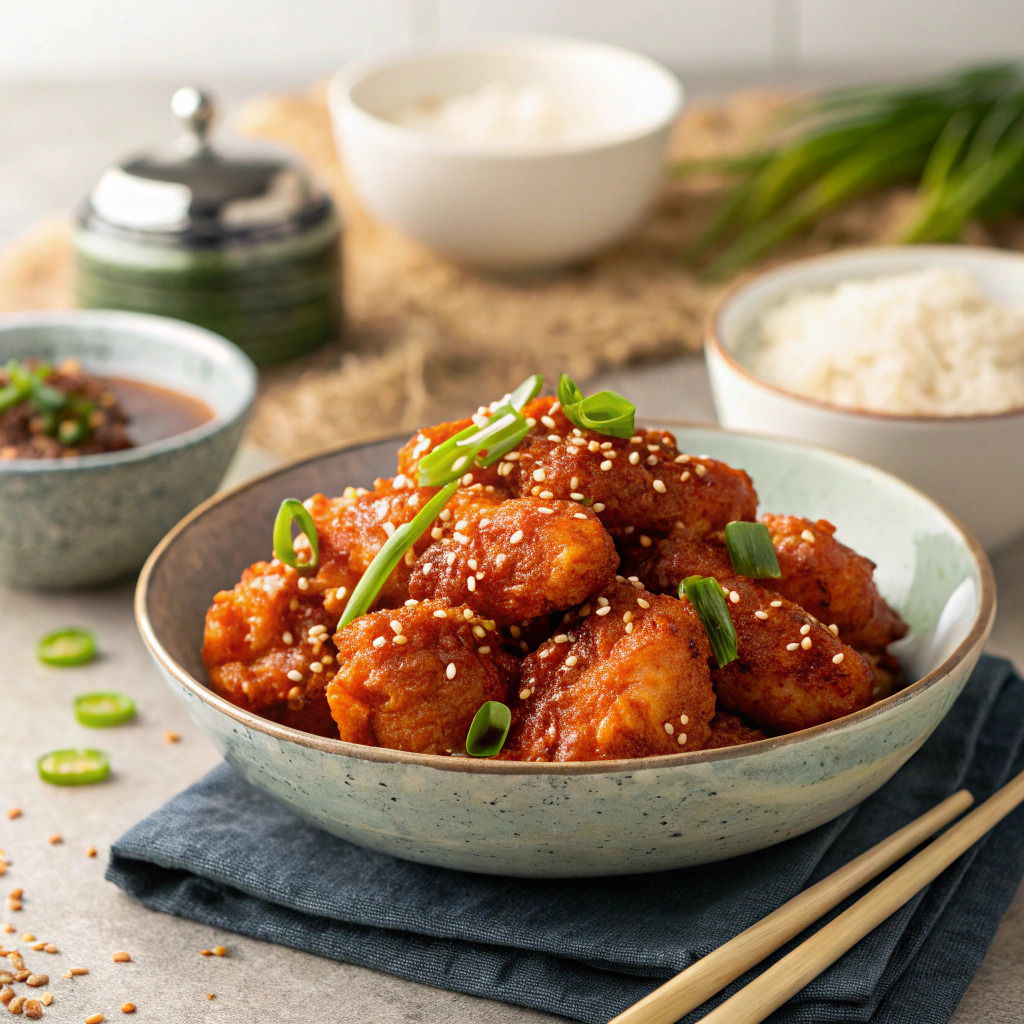
This Korean chicken recipe is special because it combines a crunchy texture with a vibrant sauce that embodies the essence of Korean cuisine. The crispy exterior is achieved through a simple frying technique that locks in the juiciness of the chicken while providing an irresistible crunch. The sauce is a harmonious blend of gochujang, soy sauce, garlic, and honey, creating a perfect balance of sweetness and heat.
What sets this dish apart is its versatility; it can be served as a main course or as an appetizer, making it suitable for any occasion. Additionally, the preparation is straightforward, allowing both novice and experienced cooks to enjoy the process. This dish is sure to impress your family and friends, and once you try it, you may find it becoming a staple in your culinary repertoire.
Essential equipment includes a large mixing bowl for marinating the chicken, a frying pan or deep fryer for cooking, and a saucepan for preparing the sauce. You will also need a thermometer to check the chicken's internal temperature, ensuring it reaches the safe minimum of 165°F. A slotted spoon or spider is useful for removing the chicken from the oil, and serving dishes will help present your delicious creation beautifully.
Use high-quality chicken for better flavor and texture, preferably thighs for juiciness. Marinate the chicken for at least thirty minutes to allow the flavors to penetrate. When frying, ensure the oil is at the right temperature, around 350°F, to achieve crispiness without absorbing too much oil. It’s important to avoid overcrowding the pan, as this can lead to uneven cooking. Always follow food safety guidelines by washing hands before and after handling raw chicken, and use separate cutting boards for meat and vegetables. Be sure to check the internal temperature of the chicken using a thermometer to ensure it reaches 165°F for safe consumption.

Store leftover chicken in an airtight container in the refrigerator for up to three days. Reheat thoroughly before serving.
To customize this Korean chicken recipe, consider adding sesame oil to the marinade for an extra layer of flavor. For a gluten-free option, substitute soy sauce with tamari. You can also add diced vegetables such as bell peppers or carrots to the frying pan for a colorful stir-fry. For those who enjoy a little extra heat, increase the amount of gochujang or add sliced fresh chili peppers to the sauce. If you prefer a healthier version, try baking the chicken instead of frying it, adjusting the cooking time accordingly.
Serve the crispy Korean chicken hot, garnished with sesame seeds and chopped green onions for a pop of color. Pair it with steamed rice or a refreshing cucumber salad to balance the flavors. This dish also goes well with kimchi or pickled vegetables, enhancing the Korean dining experience. For a fun twist, consider serving it as a wrap in lettuce leaves, allowing guests to assemble their own bites.
| Problem | Solution |
|---|---|
| The chicken isn't crispy. | Ensure the oil is hot enough before adding the chicken and avoid overcrowding the pan, as this can lower the oil temperature. |
| The sauce is too spicy. | Adjust the amount of gochujang to your taste or balance it with more honey for sweetness. |
| Chicken is overcooked and dry. | Use a thermometer to monitor the internal temperature, removing the chicken from the heat as soon as it reaches 165°F. |
| Sauce is too thick. | Add a splash of water or chicken broth to thin it out while heating. |
| The flavor is lacking. | Ensure you marinate the chicken long enough and taste the sauce before serving, adjusting seasonings as needed. |
Can I use chicken breasts instead of thighs?
Yes, chicken breasts can be used, but they may not be as juicy.
What if I don't have gochujang?
You can substitute with a mix of chili paste and a bit of sugar.
Can I make this dish in advance?
Yes, you can marinate the chicken ahead of time and fry it just before serving.
Is this dish spicy?
The spice level can be adjusted by modifying the amount of gochujang used.
How can I make this dish healthier?
Consider baking the chicken instead of frying and using less honey.
