
📌 Love these? Pin your favorites—it helps us grow!
Homemade chicken broth is a comforting and flavorful base for countless dishes. It's simple to prepare and can elevate your soups, stews, and sauces. Making it from scratch allows you to control the ingredients and ensure the best taste.
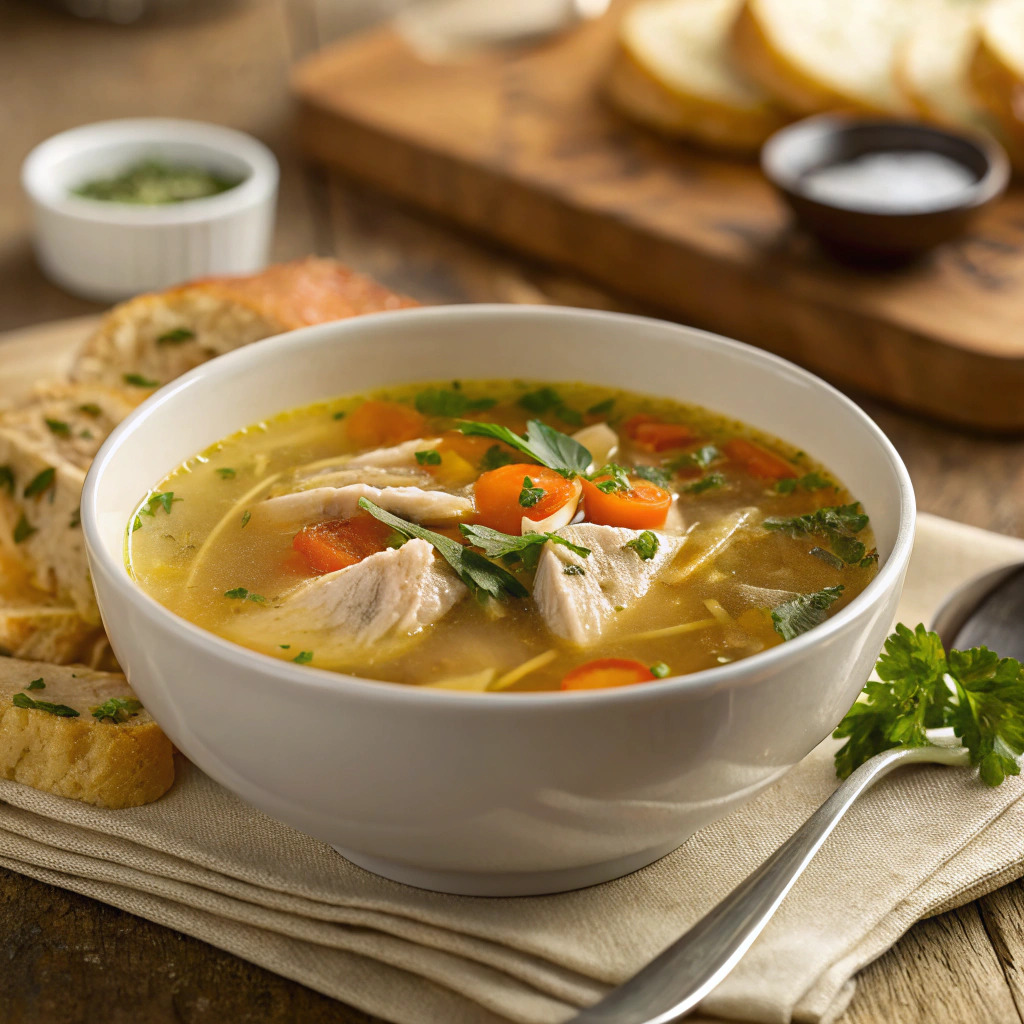
Creating chicken broth from scratch is both a culinary art and a practical skill. The rich, savory flavor of homemade broth far surpasses anything store-bought. Not only does it provide a warm and inviting taste, but it also serves as a foundation for many recipes. The process allows you to extract flavors and nutrients from the chicken and vegetables, resulting in a nourishing liquid. Utilizing leftover bones and scraps can be a wonderful way to minimize waste while maximizing flavor. The aroma that fills your kitchen while simmering is simply irresistible, making the effort worth every moment.
This recipe is versatile, allowing for personalization based on available ingredients. You can adjust the herbs and vegetables according to your preferences or what you have on hand. Whether you need it for a classic chicken noodle soup or as a base for risottos, this homemade chicken broth will be your go-to recipe.
To make chicken broth, you will need a large stockpot to accommodate all the ingredients and allow for proper simmering. A fine mesh strainer or cheesecloth will help you achieve a clear broth by filtering out the solids. A ladle is useful for transferring the broth into containers, and measuring cups will assist in portioning ingredients accurately. A large spoon for stirring is also necessary. Additionally, having airtight containers or freezer bags will help you store the broth effectively.
When making chicken broth, always ensure that you start with fresh ingredients. This not only enhances flavor but also ensures the safety of the broth. Make sure to wash vegetables thoroughly and use cold water to cover the ingredients. Simmer the broth gently rather than boiling it rapidly, as this helps to extract flavors without clouding the liquid. Skimming off any foam that rises to the top during the simmering process will help yield a clearer broth.
Food safety is crucial; always cook chicken to an internal temperature of 165°F to prevent foodborne illness. If using raw chicken, ensure to refrigerate any unused broth promptly. Store the broth in the refrigerator for up to a week or freeze it for longer preservation. When reheating, ensure the broth reaches a boil to eliminate any potential bacteria.

Store the chicken broth in the refrigerator for up to one week, or freeze in airtight containers for up to three months.
There are many ways to customize your chicken broth. You can add different herbs such as thyme, rosemary, or bay leaves to enhance the flavor profile. Incorporating root vegetables like parsnips or turnips can provide additional depth. For a slightly Asian twist, consider adding ginger and garlic, which can introduce warmth and spice. If you prefer a richer broth, roasting the chicken bones beforehand can create a deeper, more complex flavor. Experiment with different combinations to find the perfect blend for your taste.
Chicken broth can be enjoyed on its own, served hot in a bowl with a sprinkle of fresh herbs. It's also perfect as a base for soups and stews, adding layers of flavor to your favorite recipes. You can use it to cook grains like rice or quinoa, infusing them with rich taste. For a more substantial meal, consider adding cooked chicken and vegetables directly into the broth. Homemade chicken broth can elevate any dish, making it a staple in your kitchen.
| Problem | Solution |
|---|---|
| The broth tastes bland. | Ensure you are using enough salt and seasoning. Consider adding more aromatics like garlic, onion, or herbs during the cooking process. |
| The broth is cloudy. | Skim off any foam and impurities during simmering. Make sure to strain it through a fine mesh strainer or cheesecloth after cooking. |
| The broth lacks depth. | Try roasting the chicken bones and vegetables before simmering to enhance the flavor. Adding a splash of vinegar can also help extract more flavors. |
| The broth is too greasy. | Allow the broth to cool, then refrigerate. The fat will solidify on top, making it easy to remove before using. |
| The broth does not gel when cooled. | Ensure you are using enough collagen-rich parts, like bones and skin, in your broth. Adjust the ratio of bones to water for better results. |
Can I use leftover chicken bones?
Yes, leftover bones work well for making broth.
How can I make a vegetarian version?
Use vegetable scraps and herbs instead of chicken.
Can I add other vegetables?
Absolutely, feel free to experiment with different vegetables.
How can I store broth long-term?
Freeze broth in portions using ice cube trays or airtight containers.
What dishes can I use chicken broth in?
Use it in soups, risottos, sauces, and for cooking grains.
