
📌 Love these? Pin your favorites—it helps us grow!
Indulge in a delightful salmon pasta that combines the richness of creamy sauce with the heartiness of perfectly cooked pasta. This dish is not only satisfying but also packed with protein, making it a perfect choice for a wholesome meal.
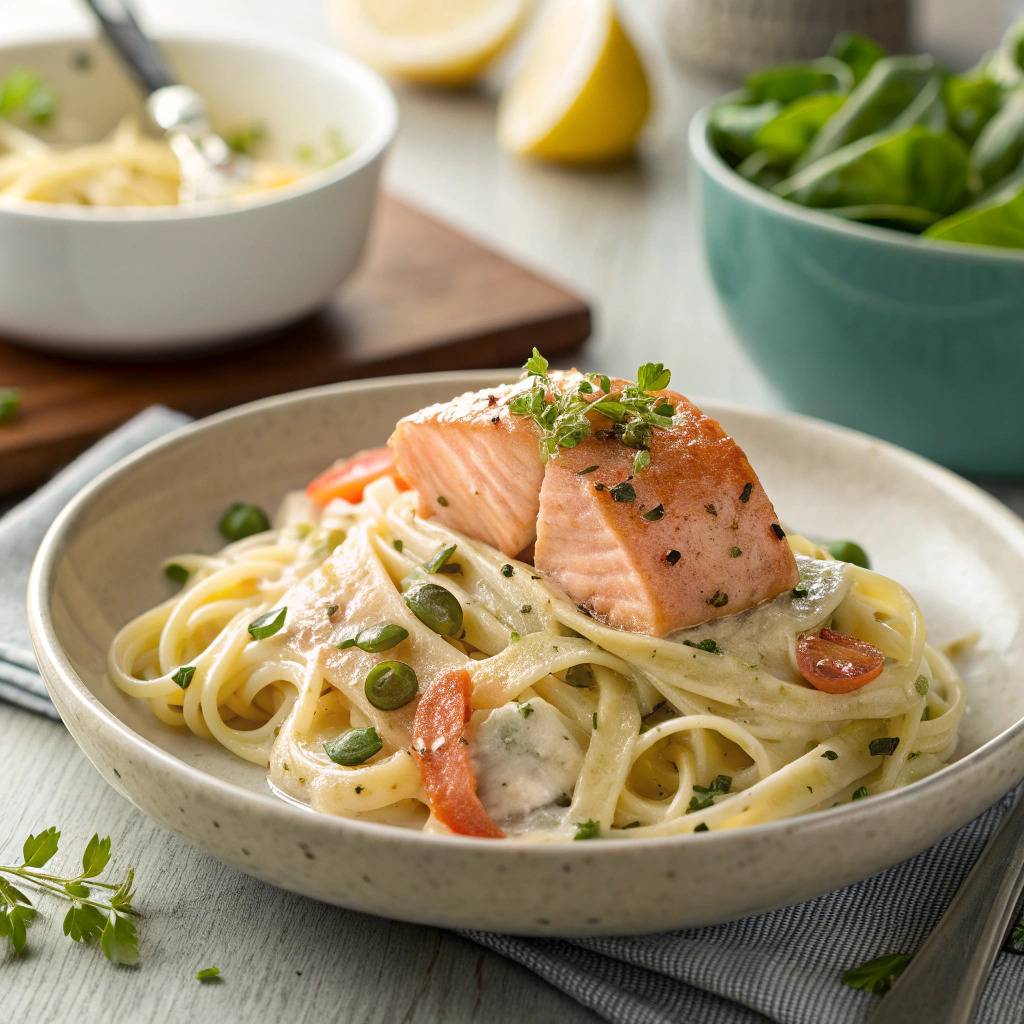
This salmon pasta recipe stands out for its luxurious cream sauce, which beautifully complements the tender salmon and al dente pasta. The combination of flavors creates a comforting dish that can be served for special occasions or a cozy weeknight dinner. Salmon is known for its health benefits, particularly its omega-3 fatty acids, making this recipe a nutritious choice without sacrificing taste. The process of preparing it is simple, allowing even novice cooks to impress their family and friends. The creamy sauce, flavored with garlic and herbs, envelops the pasta, while the salmon adds a delightful protein punch. This dish not only fills the belly but also warms the soul, making it a favorite among pasta lovers.
To make this salmon pasta, you will need a large pot for boiling the pasta and a skillet for preparing the sauce. A colander will be essential for draining the pasta. Additionally, have a whisk on hand for mixing the sauce and a spatula for stirring. A sharp knife and cutting board are necessary for chopping the garlic and herbs. It’s also helpful to have measuring cups for accurate ingredient portions. Having a meat thermometer can ensure the salmon is cooked to the right temperature, reaching an internal temperature of 145°F to ensure safety.
When preparing this salmon pasta, choose fresh salmon for the best flavor. If using frozen salmon, ensure it is fully thawed before cooking. Always check that the salmon reaches an internal temperature of 145°F to ensure it is safe to eat. While cooking the pasta, add salt to the boiling water to enhance the flavor. For the cream sauce, avoid boiling it vigorously after adding the cream to prevent curdling; instead, allow it to simmer gently. If you prefer a lighter version, consider using half-and-half instead of heavy cream. Always wash your hands and surfaces before and after handling raw fish to prevent cross-contamination. Leftover salmon can be refrigerated and used in salads or sandwiches.

Store leftovers in an airtight container in the refrigerator for up to three days. Reheat gently on the stove or in the microwave.
To give this salmon pasta a unique twist, consider adding vegetables like spinach, peas, or sun-dried tomatoes for added nutrition and flavor. You can also experiment with different types of pasta, such as penne or fettuccine, to find your favorite pairing. For a spicier kick, add red pepper flakes to the sauce. If you’re looking for a lighter option, substitute the heavy cream with Greek yogurt or a plant-based cream alternative. For those who enjoy a bit of zest, a squeeze of lemon juice can brighten up the dish beautifully.
Serve the salmon pasta hot, garnished with freshly chopped parsley or dill for an extra touch of flavor. A sprinkle of grated Parmesan cheese can also enhance the dish's richness. This meal pairs well with a light salad or steamed vegetables on the side to balance the creaminess. A glass of white wine or sparkling water can complement the flavors beautifully. For a more casual approach, serve it in bowls with extra sauce available on the side for those who prefer a creamier experience.
| Problem | Solution |
|---|---|
| The pasta is overcooked and mushy. | To avoid this, ensure you cook the pasta al dente according to package instructions and check for doneness a minute before the recommended cooking time. |
| The sauce is too thick. | If the sauce becomes too thick, gradually whisk in a little pasta water or broth until you reach the desired consistency. |
| The salmon is dry. | Make sure to monitor the cooking time and check the internal temperature, pulling it off the heat once it reaches 145°F. |
| The dish lacks flavor. | Adjust seasoning by adding more salt, pepper, or herbs, and consider adding a splash of lemon juice for brightness. |
Can I use canned salmon for this recipe?
Yes, canned salmon can be used, but the texture and flavor will differ from fresh salmon.
What can I substitute for heavy cream?
You can use half-and-half or Greek yogurt for a lighter version.
How can I make this dish gluten-free?
Use gluten-free pasta in place of regular pasta.
Can I add other proteins to this recipe?
Yes, shrimp or chicken can be delicious alternatives to salmon.
