
📌 Love these? Pin your favorites—it helps us grow!
Basil pesto pasta is a vibrant dish that celebrates fresh ingredients and simple preparation. This recipe brings the aromatic flavors of basil, garlic, and Parmesan cheese together for a delightful meal that can be enjoyed any time of the year.
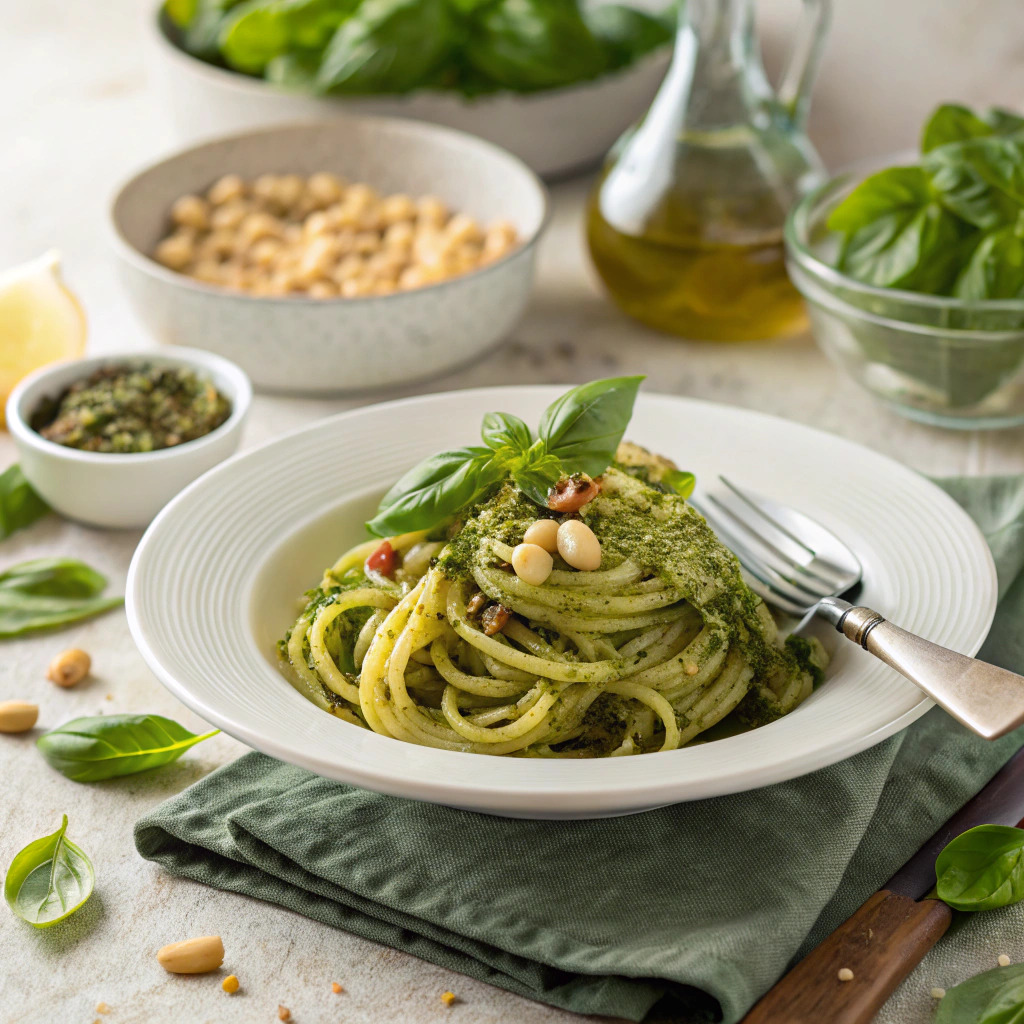
This basil pesto pasta recipe stands out due to its use of fresh, high-quality ingredients and the ease of preparation. The combination of fresh basil leaves, garlic, pine nuts, and Parmesan cheese creates a fragrant pesto sauce that coats the pasta beautifully. It's a dish that not only tastes fantastic but also looks vibrant on the plate, making it perfect for both casual dinners and special occasions.
What makes this dish truly special is the versatility of the pesto; it can be adjusted to suit your palate. You can toss in some cherry tomatoes, grilled chicken, or even a sprinkle of lemon zest for an extra burst of flavor. The creamy texture of the sauce clings to the pasta, ensuring every bite is infused with the delicious herbaceous notes of basil. This recipe is not just a meal; it’s an experience that highlights the freshness of its ingredients, and it can be prepared in under thirty minutes.
To make basil pesto pasta, you will need a few essential pieces of equipment.
When preparing basil pesto pasta, here are some helpful tips to ensure a delicious outcome. Use fresh basil leaves for the best flavor; wilted or brown leaves will affect the taste of the pesto. Toasting the pine nuts lightly before adding them to the food processor enhances their nuttiness. For food safety, ensure that the pasta reaches at least 165°F when served. Avoid cross-contamination by washing your hands and surfaces after handling raw ingredients. Store any leftover pesto in an airtight container in the refrigerator for up to a week. You can also freeze the pesto for longer storage; just be sure to leave some space in the container to allow for expansion.

Store any leftover pasta in an airtight container in the refrigerator for up to three days. Reheat gently on the stove or in the microwave, adding a splash of water if needed.
There are numerous ways to customize basil pesto pasta to suit your taste. For a nut-free version, substitute sunflower seeds or omit them entirely. If you prefer a creamier sauce, add a splash of heavy cream or a dollop of cream cheese to the pesto before mixing it with the pasta. For a dairy-free alternative, use nutritional yeast in place of Parmesan cheese. Adding grilled shrimp or chicken can transform this dish into a heartier meal, while sautéed vegetables like zucchini or bell peppers can add color and nutrition.
To serve basil pesto pasta, plate it in large bowls, allowing the vibrant green color of the pesto to shine. Consider garnishing with additional grated Parmesan cheese, a sprinkle of fresh cracked pepper, or a drizzle of olive oil for an extra touch. Pair the dish with a side salad or garlic bread for a complete meal. This pasta is best enjoyed fresh but can be stored for later if necessary.
| Problem | Solution |
|---|---|
| The pesto is too thick and doesn’t coat the pasta well. | Add a little pasta cooking water to the pesto to thin it out. Start with a tablespoon at a time until you reach the desired consistency. |
| The flavor of the pesto is too strong. | Balance it out by mixing in a little more olive oil or a splash of lemon juice to cut through the intensity. This can help enhance the overall flavor and make it more enjoyable. |
Can I use other nuts for the pesto?
Yes, you can substitute other nuts like walnuts or almonds for a different flavor.
Is basil pesto pasta suitable for vegetarians?
Yes, this dish is vegetarian-friendly as it contains no meat.
