
📌 Love these? Pin your favorites—it helps us grow!
Bulgogi beef is a beloved Korean dish known for its sweet and savory flavors that tantalize the taste buds. This recipe captures the essence of this classic dish, making it easy to recreate in your own kitchen, whether for a family dinner or a special gathering.
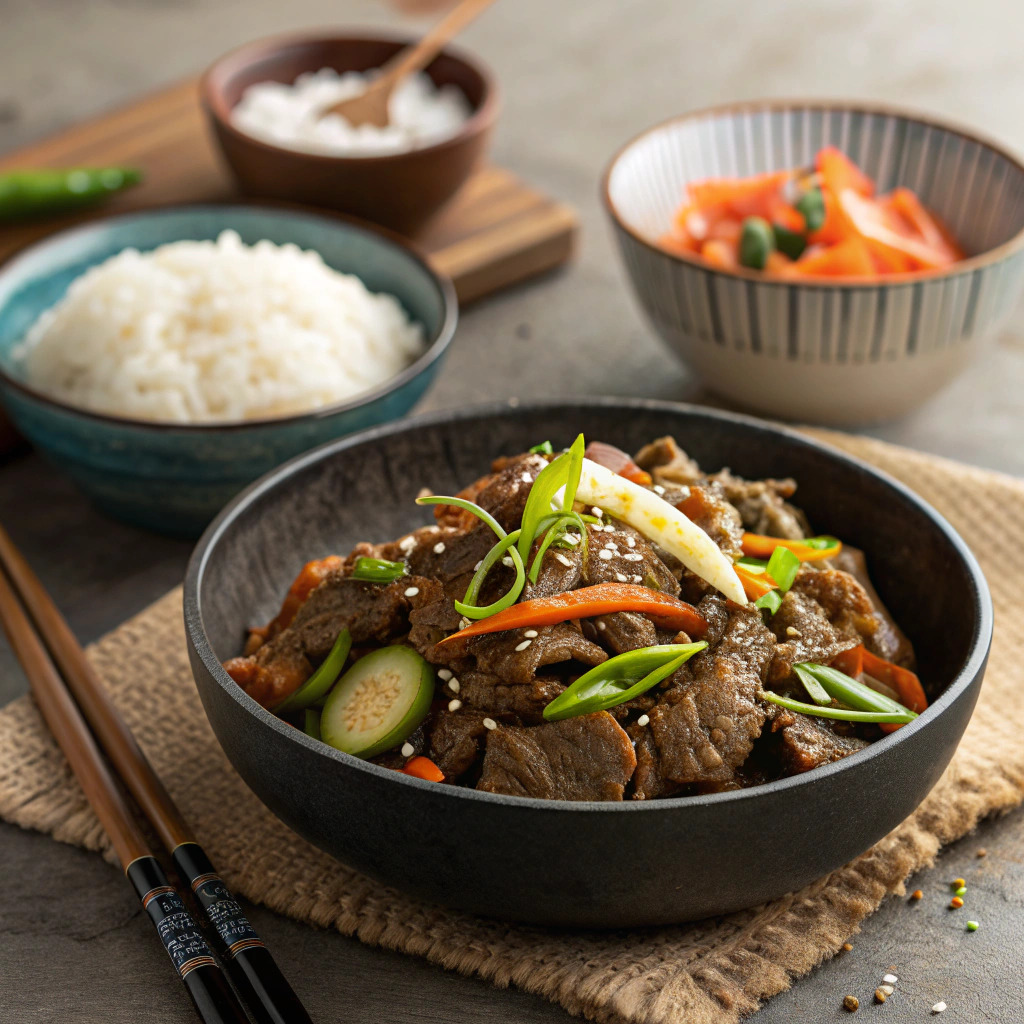
This bulgogi beef recipe stands out because of its balance of flavors and the tender texture of the meat, thanks to the marinating process. The marinade, made from soy sauce, sugar, sesame oil, and garlic, infuses the beef with a rich taste that is both sweet and umami. Using thinly sliced beef allows for quick cooking, making it a perfect weeknight meal or a dish to impress guests. The quick stir-fry method retains the juicy tenderness of the beef, while the caramelization from the marinade adds a delightful depth to the dish.
Bulgogi is traditionally served with rice and various banchan, or side dishes, which enhance the dining experience. This recipe honors the traditional flavors while also making it accessible for home cooks. You will love how simple it is to achieve authentic Korean flavors right in your own kitchen, bringing a piece of Korea to your dining table.
You will need a few essential tools to make this bulgogi beef.
For optimal flavor, marinate the beef for at least one hour, though overnight is preferable. Slice the beef against the grain to ensure tenderness. If you can’t find specific ingredients, substitutions can be made; for example, honey can replace sugar, and green onions can add freshness. Always handle raw meat carefully to avoid cross-contamination. Wash your hands thoroughly after touching raw beef and sanitize any surfaces that come into contact with it. Ensure that the beef reaches an internal temperature of 160°F for safe consumption. As a safety note, if marinating for more than two hours, keep it refrigerated to prevent bacterial growth.

Store any leftover bulgogi beef in an airtight container in the refrigerator for up to three days. Reheat gently on the stovetop or in the microwave before serving.
There are some delightful variations to bulgogi beef that you can explore. You can use different cuts of beef, such as sirloin or ribeye, depending on your preference and budget. For a twist, try adding sliced mushrooms, bell peppers, or onions to the beef during cooking for additional flavor and nutrition. If you're looking for a healthier version, substitute part of the beef with thinly sliced tofu or a mix of vegetables for a vegetarian option. Feel free to adjust the sweetness of the marinade by varying the sugar or using alternative sweeteners. Another interesting variation is to grill the marinated beef on skewers for a fun presentation and smoky flavor.
Serve bulgogi beef hot, straight from the skillet or grill, over a bed of steamed rice. Garnish with sliced green onions or sesame seeds for an attractive finish. Pair it with traditional banchan like kimchi, pickled radish, or a fresh salad to enhance the meal. Wrap the beef in lettuce leaves for a fun, interactive dining experience, allowing guests to create their own wraps. This dish is perfect for family-style dining or for impressing friends at a gathering.
| Problem | Solution |
|---|---|
| The beef is tough after cooking. | Ensure you slice the beef thinly against the grain before marinating. Overcooking can also lead to toughness, so be mindful of the cooking time and remove the beef from heat as soon as it is browned. |
| The flavor is too salty. | Use low-sodium soy sauce in the marinade to control the saltiness. Additionally, balance the flavors by increasing the sweetness with extra sugar or honey, or by adding more vegetables to dilute the saltiness. |
Can I use a different type of meat for bulgogi?
Yes, you can use pork, chicken, or even tofu as a substitute for beef.
What can I serve with bulgogi beef?
Bulgogi beef is traditionally served with rice and various side dishes like kimchi or pickled vegetables.
