
📌 Love these? Pin your favorites—it helps us grow!
Challah bread is a beautiful and rich loaf that brings warmth and comfort to any table. Perfect for special occasions or everyday meals, its soft texture and slightly sweet flavor make it a favorite for many.
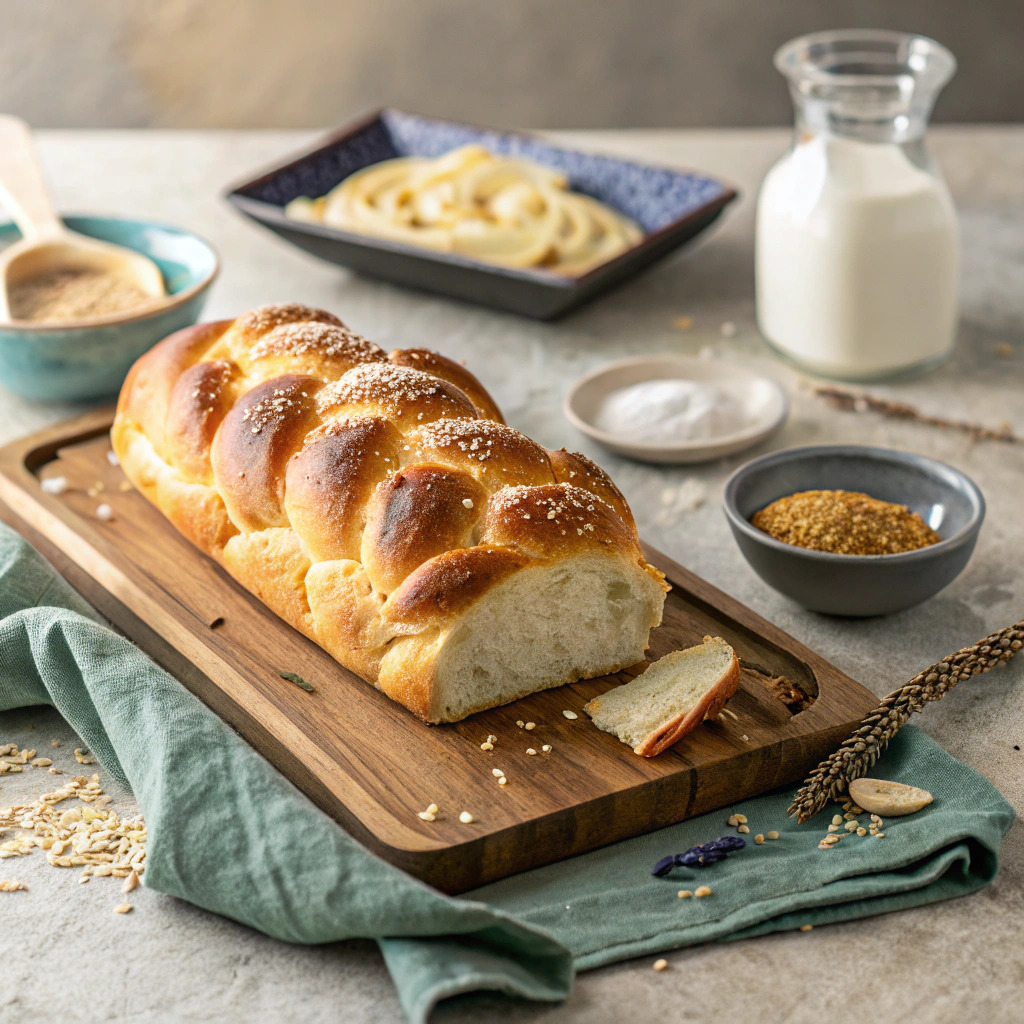
This recipe for challah bread captures the essence of tradition and home-baked goodness. Originating from Jewish culture, challah is a braided bread often enjoyed during Shabbat and holidays. Its distinctive shape and golden crust make it not just a treat for the taste buds, but also a visual delight. The braided form symbolizes unity and the intertwining of life, making it a special addition to family gatherings. The dough is enriched with eggs, giving it a tender crumb and a beautiful golden hue. Each bite is a perfect balance of sweetness and depth, creating a loaf that can be enjoyed on its own or paired with dishes such as soups, salads, or even transformed into decadent French toast. The process of braiding the dough can also be a fun activity for families, allowing everyone to participate in creating this beloved bread.
To make challah bread, gather the following equipment.
For the best results, ensure all ingredients are at room temperature before starting. When activating yeast, use warm water, not hot, as temperatures above 120°F can kill the yeast. Knead the dough until it is smooth and elastic, which usually takes around ten minutes. Letting the dough rise in a warm place can speed up the fermentation process and create a fluffier loaf. Always check the internal temperature to confirm doneness; the bread should reach an internal temperature of at least 190°F. If the bread browns too quickly while baking, consider covering it loosely with aluminum foil. For food safety, always wash your hands after handling raw ingredients, and avoid cross-contamination by using separate utensils for raw and cooked foods.

Store leftover challah bread in an airtight container at room temperature for up to three days, or freeze for longer storage.
Challah bread can be customized in various ways to suit different tastes. For a richer flavor, consider adding honey or sugar for sweetness. You could incorporate seeds like sesame or poppy on top for an added crunch and visual appeal. For a savory twist, try adding herbs or garlic powder to the dough. To create a visually striking loaf, experiment with different braiding techniques, such as a four-strand braid instead of the traditional three. This adds not only beauty but also a unique texture to each slice. If you want to make individual rolls, simply divide the dough into smaller portions and braid them accordingly. The possibilities are endless, making this recipe adaptable to any occasion.
Challah bread is best served warm, fresh from the oven. Slice the loaf and serve it with butter, honey, or jam for a delightful breakfast or snack. It also pairs beautifully with soups and salads, or can be used to make French toast, providing a deliciously sweet and rich flavor. For special occasions, consider presenting the bread on a decorative platter for a stunning centerpiece. Leftover challah can be toasted or turned into bread pudding, ensuring nothing goes to waste.
| Problem | Solution |
|---|---|
| The dough didn’t rise as expected. | Ensure your yeast is fresh and active. Check the water temperature when activating the yeast; it should be warm but not hot. |
| The bread is too dense. | Ensure you kneaded the dough sufficiently; under-kneaded dough can lead to a dense loaf. Also, make sure to allow adequate rising time in a warm environment. |
| The crust is too hard. | You can brush the loaf with a mixture of water and egg wash before baking to create a softer crust. If it browns too quickly, cover it with foil. |
| The bread is dry. | Overbaking can cause dryness; use a thermometer to check for doneness and remove it from the oven once it reaches the correct temperature. |
Can I use whole wheat flour instead of all-purpose flour?
Yes, you can substitute whole wheat flour, but the texture may be denser.
How can I tell when my bread is done baking?
The bread should be golden brown and have an internal temperature of at least 190°F.
Can I make challah bread in advance?
Yes, you can make the dough in advance and refrigerate it before the second rise.
What can I do with leftover challah bread?
Leftover challah can be used for French toast, bread pudding, or simply toasted with toppings.
