
📌 Love these? Pin your favorites—it helps us grow!
Dutch oven beef stew is the ultimate comfort food, perfect for chilly days. Its rich flavor and tender meat create a hearty dish that warms the soul and fills the belly.
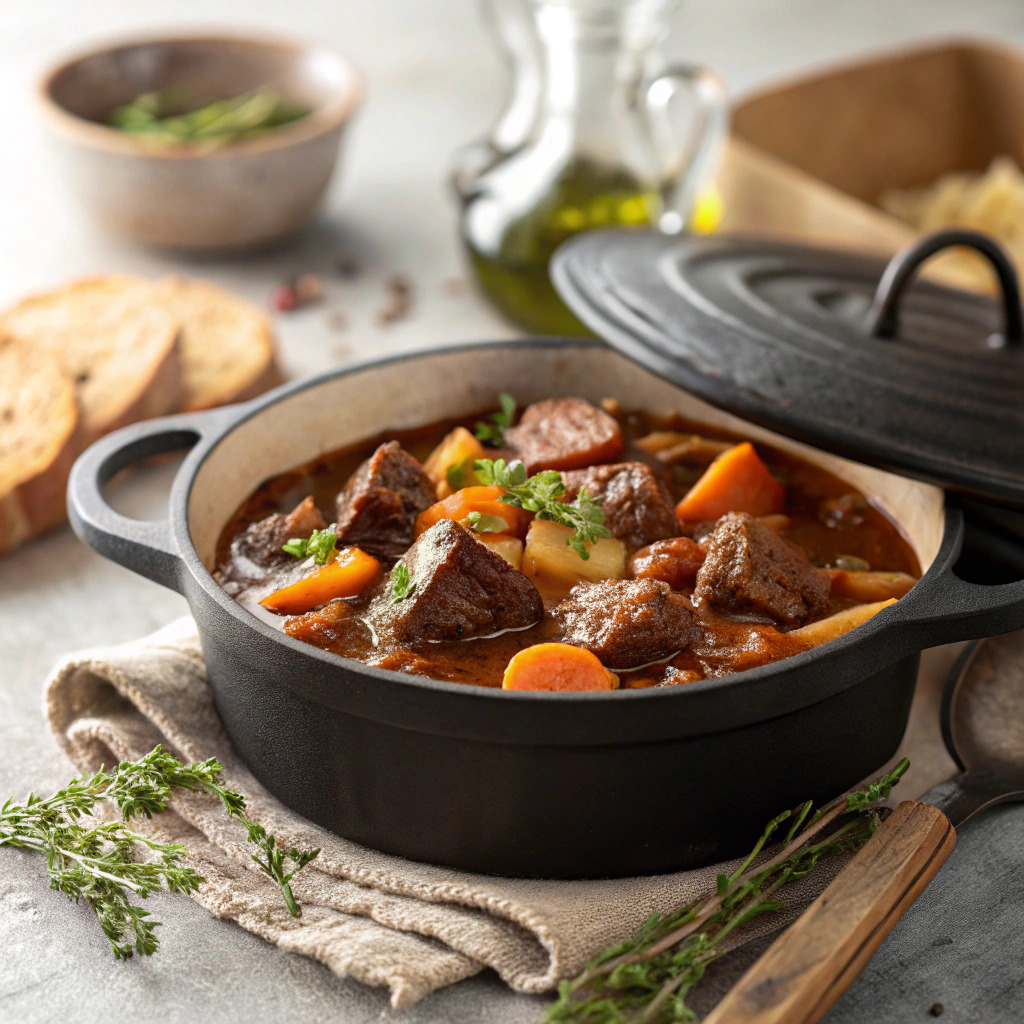
This recipe for dutch oven beef stew is special because it combines tender chunks of beef with a medley of vegetables and aromatic herbs, simmered to perfection. The slow cooking process in a dutch oven allows the flavors to meld beautifully, resulting in a stew that is both rich and comforting. The use of a dutch oven ensures even heat distribution, making the beef incredibly tender while allowing the vegetables to maintain their shape. This dish is not only satisfying but also versatile, as it can be served as a main course or enjoyed the next day as leftovers. Whether served on a cold winter evening or during a family gathering, this stew is sure to impress your guests and satisfy your cravings.
Garnished with fresh herbs or served with crusty bread, this stew is a delightful way to bring warmth and flavor to your table.
To prepare this dish, you will need the following equipment.
To ensure the best results, consider these tips. Choose a tough cut of beef, like chuck roast, as it becomes tender after slow cooking. Sear the beef in batches to achieve a rich brown crust, enhancing the flavor of the stew. Be mindful of the vegetables; add heartier ones like carrots and potatoes early in the cooking process, while adding more delicate ones like peas later on to prevent mushiness. Always check the internal temperature of the beef to ensure it reaches 160°F. Food safety is crucial, so wash your hands and all surfaces that come into contact with raw meat to prevent cross-contamination. Keep leftovers refrigerated within two hours of cooking and consume them within three to four days.

Store leftovers in an airtight container in the refrigerator for up to four days. Reheat gently on the stove or in the microwave.
You can customize this dutch oven beef stew to suit your tastes. For a different flavor profile, add red wine or balsamic vinegar during the cooking process for depth. If you're looking for a healthier option, substitute some of the potatoes with parsnips or sweet potatoes. To make a richer stew, consider adding a tablespoon of tomato paste or Worcestershire sauce. If you prefer a spicy kick, toss in some red pepper flakes or diced jalapeños. For a vegetarian version, replace the beef with hearty vegetables and legumes, using vegetable broth as the base.
Serve the dutch oven beef stew hot, ladled into bowls, and garnished with freshly chopped parsley for a burst of color. It pairs wonderfully with crusty bread or over a bed of fluffy mashed potatoes. For a complete meal, consider serving alongside a simple green salad to balance the richness of the stew. This dish also reheats beautifully, making it a convenient option for meal prep or next-day lunches.
| Problem | Solution |
|---|---|
| The stew is too thick. | If the stew is thicker than desired, add a little beef broth or water to achieve your preferred consistency while simmering. |
| The beef is tough. | If the meat isn't tender, it likely needs more time to cook. Continue simmering until it reaches the desired tenderness. |
| The flavor is too bland. | Enhance the stew by adding more seasoning, herbs, or a splash of vinegar to brighten the flavors. |
| The vegetables are mushy. | To avoid mushy vegetables, add them at different times based on their cooking times, ensuring the heartier ones go in first. |
Can I use a slow cooker instead of a dutch oven?
Yes, you can adapt the recipe for a slow cooker by cooking on low for six to eight hours.
What can I substitute for beef?
You can use lamb or a plant-based meat substitute for a different flavor.
Is it necessary to brown the meat?
Browning the meat adds depth of flavor, but you can skip this step if you're short on time.
Can I freeze the stew?
Yes, the stew can be frozen for up to three months. Thaw in the refrigerator before reheating.
What herbs can I use instead of thyme?
Rosemary or oregano can be used as substitutes for thyme, offering their unique flavors.
