
📌 Love these? Pin your favorites—it helps us grow!
Garlic chicken pasta combines the rich flavors of garlic and creamy sauce for a delightful dining experience. This dish is perfect for a cozy dinner or a special occasion.
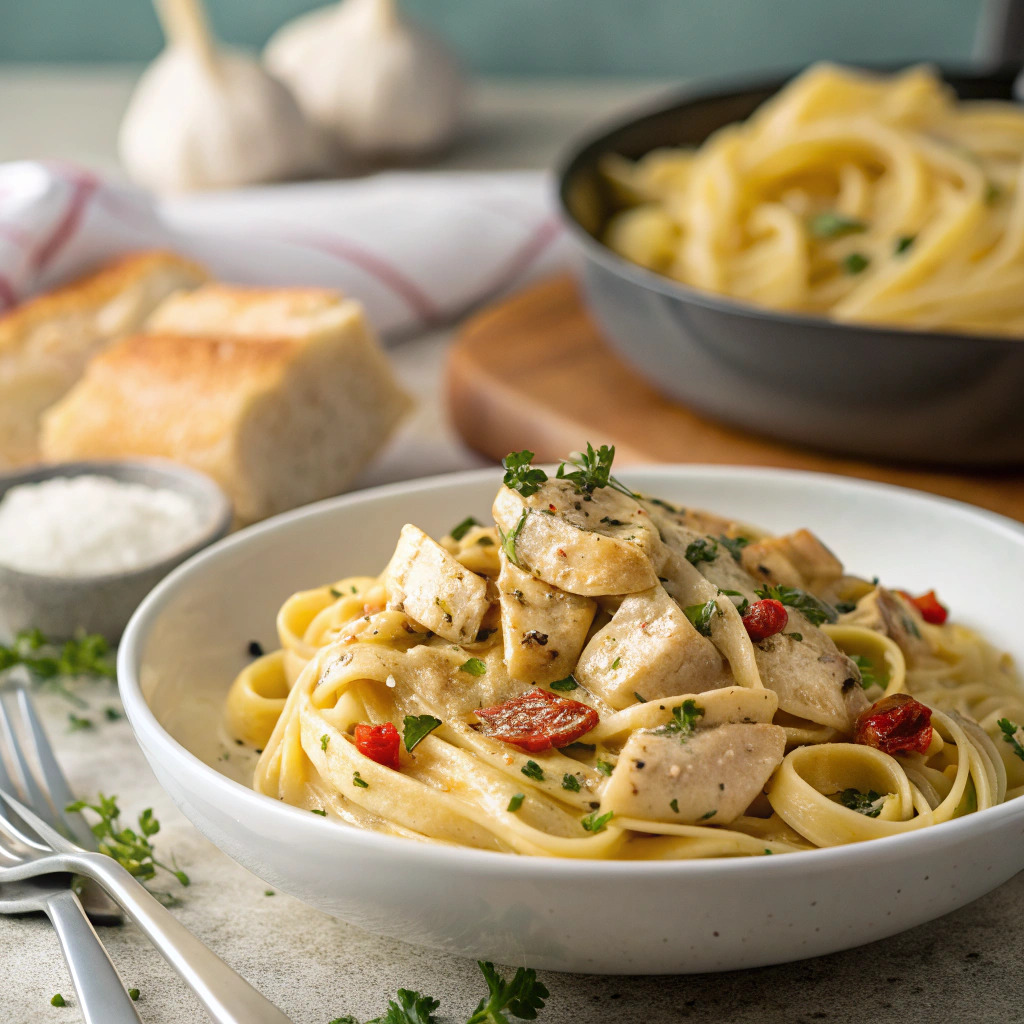
This garlic chicken pasta is a perfect blend of savory chicken, aromatic garlic, and a rich, creamy sauce that clings to each strand of pasta. It’s an easy yet impressive dish that can be whipped up in under an hour, making it ideal for busy weeknights or romantic dinners at home. The robust flavor of garlic infuses the chicken, creating a mouthwatering aroma that will tantalize your taste buds. The creaminess of the sauce balances the dish beautifully, ensuring that every bite is satisfying. Whether you're cooking for family or entertaining friends, this garlic chicken pasta is sure to be a hit.
The combination of spices and fresh ingredients makes this dish not only delicious but also visually appealing. With just a few simple steps, you can create a restaurant-quality meal that showcases your culinary skills. Pair it with a light salad and a glass of white wine for a complete dining experience. This recipe is versatile, allowing you to add your favorite vegetables or adjust the seasoning to suit your palate.
To prepare this dish, you will need several essential kitchen tools.
When making garlic chicken pasta, there are a few tips to enhance your dish. First, always use fresh garlic for the best flavor. If you prefer a milder taste, sauté the garlic until just fragrant before adding the chicken. Ensure the chicken is cooked to an internal temperature of 165°F for safety. When cooking the pasta, remember to salt the water generously to enhance the pasta's flavor. Once drained, toss the pasta with a bit of olive oil to prevent sticking. For a creamier sauce, consider adding more heavy cream or a splash of pasta water. Always taste and adjust seasoning as needed. For food safety, avoid cross-contamination by using separate cutting boards for raw chicken and vegetables.

Store leftovers in an airtight container in the refrigerator for up to three days. Reheat gently on the stovetop or in the microwave, adding a splash of water or cream to restore creaminess.
There are plenty of ways to customize garlic chicken pasta to suit your taste. You can add seasonal vegetables such as spinach, broccoli, or sun-dried tomatoes for added nutrition and color. If you’re looking for a lighter version, consider using whole wheat pasta or substituting half of the heavy cream with low-fat milk or vegetable broth. For a kick of heat, add red pepper flakes or sauté some freshly chopped chili peppers with the garlic. If you prefer a vegetarian option, you can easily replace the chicken with sautéed mushrooms or roasted vegetables, maintaining the flavorful garlic and creamy sauce.
To serve garlic chicken pasta, plate the pasta in a shallow bowl or a wide plate, allowing the sauce to pool slightly. Garnish it with freshly grated Parmesan cheese and a sprinkle of chopped parsley for color and added flavor. Pair it with a simple green salad dressed with vinaigrette and some crusty garlic bread for an authentic Italian meal experience. This dish is best enjoyed immediately but can also be reheated for leftovers the next day.
| Problem | Solution |
|---|---|
| The sauce is too thick. | If the sauce becomes too thick, add a splash of pasta cooking water or additional cream to reach your desired consistency. Stir well to combine. |
| Chicken is dry. | If the chicken turns out dry, ensure you are not overcooking it. Use a meat thermometer to check for doneness at 165°F. For added moisture, consider slicing the chicken and mixing it back into the sauce. |
| Pasta is sticky. | If the pasta sticks together, toss it with olive oil immediately after draining, and make sure to stir it frequently while cooking. |
Can I use frozen chicken for this recipe?
Yes, but make sure to thaw it completely and ensure it reaches the proper internal temperature while cooking.
What can I substitute for heavy cream?
You can use half-and-half or a combination of milk and flour for a lighter sauce.
Can I make this dish ahead of time?
While it's best served fresh, you can prepare the sauce and cook the pasta ahead, then combine them when ready to serve.
