
📌 Love these? Pin your favorites—it helps us grow!
Experience the delightful texture and flavor of Japanese milk bread, a soft and fluffy loaf that melts in your mouth. This recipe captures the essence of traditional Japanese baking, resulting in a buttery perfection that is irresistible and perfect for any occasion.
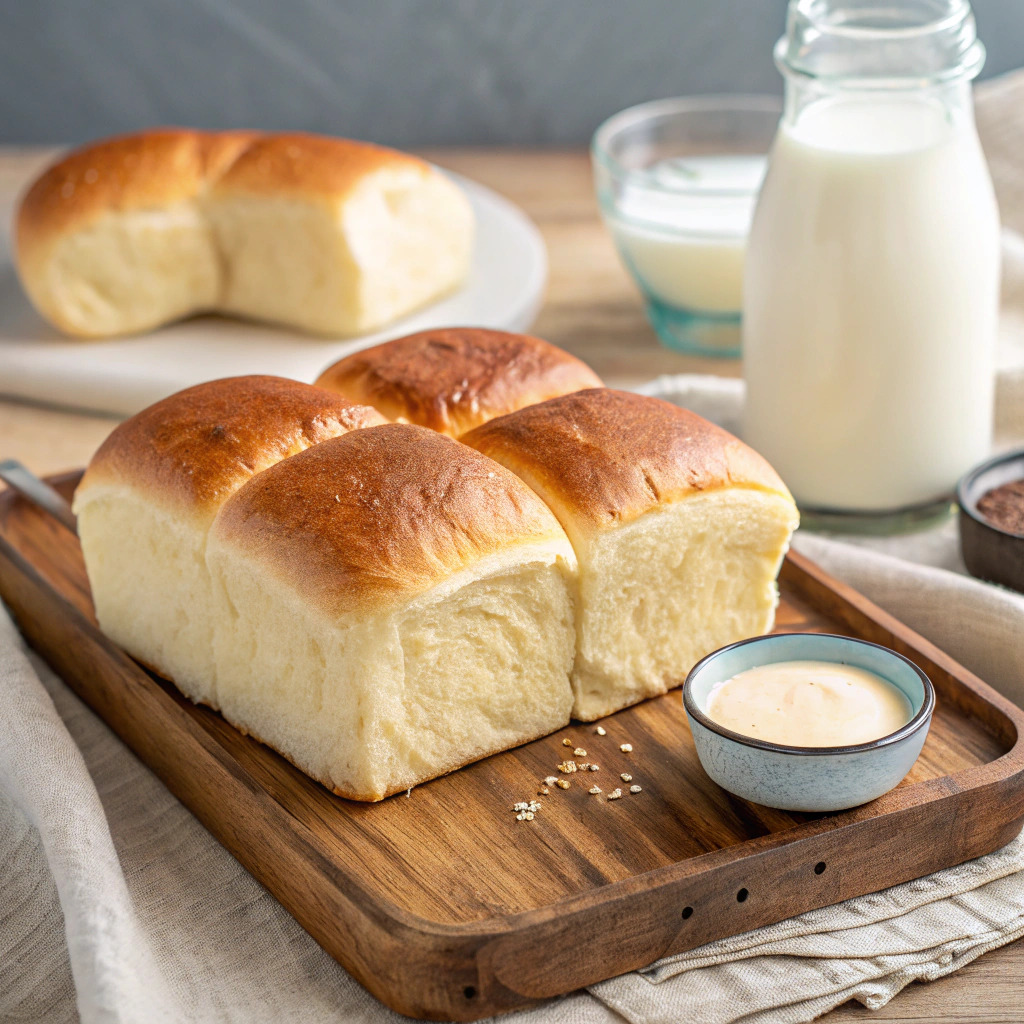
Japanese milk bread is renowned for its incredibly soft and airy texture, making it a favorite for breakfast and beyond. This unique bread utilizes a technique called tangzhong, which involves cooking a portion of the flour and water mixture before adding it to the dough. This process not only enhances the bread's moisture retention but also contributes to its signature fluffiness. The gentle sweetness and buttery flavor make it a versatile choice for sandwiches, toast, or simply enjoyed on its own. It’s a wonderful way to bring the warmth of Japanese baking into your home, impressing family and friends with something that looks and tastes extraordinary. Once you try this recipe, you’ll understand why Japanese milk bread has captured the hearts of many around the world.
To successfully make Japanese milk bread, gather the following equipment.
For the best results, follow these tips closely. Ensure that your ingredients are at room temperature to promote proper yeast activity. When making the tangzhong, cook it gently to avoid lumps, stirring continuously until it thickens to a pudding-like consistency. Be patient during the kneading process; the dough should be smooth and elastic. Allow ample time for both rises, as this is crucial for achieving that airy texture. Always check the internal temperature; the bread should reach at least 190°F when fully baked. To maximize freshness, store the bread in an airtight container at room temperature. Avoid cutting the bread until it’s completely cooled to maintain its structure. Sanitize all surfaces and equipment before starting, and wash your hands thoroughly before handling food.

Store in an airtight container at room temperature for up to three days. For longer storage, freeze slices in a freezer bag.
Consider experimenting with this recipe to create your perfect loaf. For a sweeter version, add a bit of sugar or honey to the dough. Incorporating ingredients like matcha powder can give the bread a unique flavor and a vibrant green hue. Dried fruits or nuts can also be folded into the dough for added texture and flavor. You might try making smaller rolls instead of a loaf for individual servings. Another fun variation is to use different types of milk, such as almond or coconut milk, to impart a subtle flavor twist. Each variation allows you to customize the bread to suit your taste preferences while retaining the signature softness.
Japanese milk bread is best enjoyed fresh but can be toasted for extra crunch. Slice it thick for sandwiches, or enjoy it plain with a pat of butter or a dollop of jam. It pairs wonderfully with coffee or tea, making it a delightful breakfast or afternoon snack. For special occasions, consider serving it alongside a selection of spreads for a fun brunch experience. Its soft texture also makes it a great option for French toast or bread pudding, showcasing its versatility in a variety of dishes.
| Problem | Solution |
|---|---|
| The bread doesn’t rise properly. | Ensure your yeast is fresh and active. Check the temperature of your environment; it should be warm but not hot. |
| The crust is too hard. | Brush the top with melted butter before baking or cover the bread with foil during the last part of baking to retain moisture. |
| The bread is dense. | This may be due to over-kneading or not allowing enough time for the dough to rise, so monitor both processes closely. |
| The tangzhong has lumps. | Whisk continuously as you heat it to prevent clumping and ensure a smooth mixture. |
| The bread sticks to the pan. | Use parchment paper or ensure the pan is well-greased before adding the dough. |
Can I use all-purpose flour instead of bread flour?
While you can use all-purpose flour, the texture may not be as fluffy as with bread flour.
Is it necessary to use tangzhong?
Tangzhong is essential for achieving the unique softness of Japanese milk bread.
How can I tell when the bread is fully baked?
The bread should be golden brown on top and have an internal temperature of 190°F.
Can I add flavors like matcha or chocolate?
Absolutely! You can incorporate various flavors to customize the bread.
What should I do if my dough is too sticky?
If the dough is too sticky, sprinkle a little extra flour while kneading until it becomes manageable.
