
📌 Love these? Pin your favorites—it helps us grow!
Miso soup is a beloved Japanese dish that warms the soul with its umami-rich broth and comforting ingredients. Perfect for any time of year, this simple recipe highlights the delicate flavors of miso while allowing for endless variations.
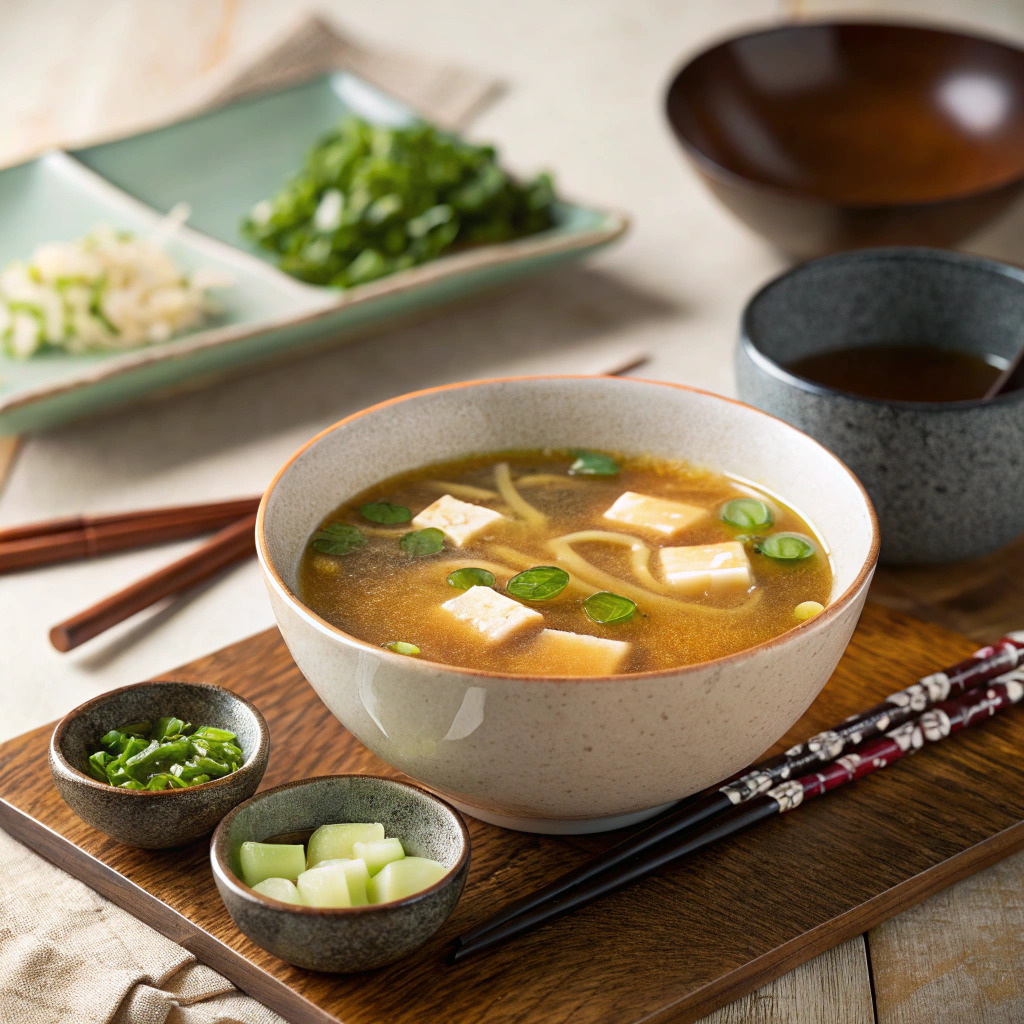
This miso soup recipe is a staple in Japanese cuisine, cherished for its simplicity and depth of flavor. Made with a base of dashi and miso paste, this dish can be enjoyed as a light meal or as a side to complement other dishes. The beauty of miso soup lies in its versatility; you can customize it with various ingredients such as tofu, seaweed, and vegetables, making it suitable for any palate.
The warmth of this soup provides not only comfort but also nourishment, as miso is rich in probiotics, vitamins, and minerals. Whether you are enjoying a quiet evening at home or sharing a meal with family, miso soup is sure to bring a sense of tranquility and satisfaction. With this recipe, you can create an authentic Japanese experience right in your kitchen.
To prepare miso soup, gather the following equipment:
When making miso soup, it’s essential to choose high-quality miso paste, as it significantly impacts the flavor. White miso is milder and sweeter, while red miso has a stronger taste. Adjust according to your preference. Always dissolve the miso paste in a small amount of hot broth before adding it to the pot to prevent clumping.
Food safety is crucial; make sure to handle all ingredients with clean hands and avoid cross-contamination. If using tofu, ensure it is fresh and properly stored. When reheating miso soup, do not boil it, as this can destroy the beneficial probiotics in miso. Heat gently until warm, and serve immediately to maintain the best flavor.

Store any leftover miso soup in an airtight container in the refrigerator for up to three days. Reheat gently without boiling to preserve the flavor.
There are countless ways to customize miso soup to suit your tastes. For a heartier version, add cubed tofu, mushrooms, and sliced green onions. You can also incorporate seasonal vegetables like spinach, carrots, or daikon radish for added nutrition and flavor. For a more traditional approach, consider adding wakame seaweed, which provides a delightful texture and enhances the soup's umami profile. Feel free to experiment with different types of miso paste and ingredients to discover your perfect combination.
Serve miso soup hot, garnished with fresh green onions or a sprinkle of sesame seeds for added flavor. It pairs beautifully with a bowl of steamed rice and can be enjoyed as a starter or alongside a more substantial meal. For a complete Japanese dining experience, consider serving it with sushi or grilled fish. Enjoying miso soup is not just about the taste; it’s about embracing the warmth and comfort it brings.
| Problem | Solution |
|---|---|
| The soup tastes too salty. | If the miso soup is overly salty, you can dilute it with additional dashi or water. This will help balance the flavors without compromising the soup's integrity. |
| The miso paste is clumping. | Always dissolve miso paste in a small amount of hot broth before adding it to the pot. This prevents clumping and ensures a smooth texture in the finished soup. |
| The soup lacks depth of flavor. | To enhance the umami flavor, consider adding a splash of soy sauce or a few drops of sesame oil. Additionally, using homemade dashi will elevate the overall taste. |
Can I make miso soup vegetarian?
Yes, use vegetable dashi or water instead of fish-based dashi.
How long can I store miso soup?
Leftover miso soup can be stored in the refrigerator for up to three days.
Is miso soup gluten-free?
Yes, as long as you use gluten-free miso and dashi.
