
📌 Love these? Pin your favorites—it helps us grow!
Moroccan couscous is a delightful dish that transports you to the vibrant streets of Morocco with each flavorful bite. It's a staple in North African cuisine, known for its fluffy texture and aromatic spices. This recipe will guide you through creating an authentic version that is perfect for any occasion.
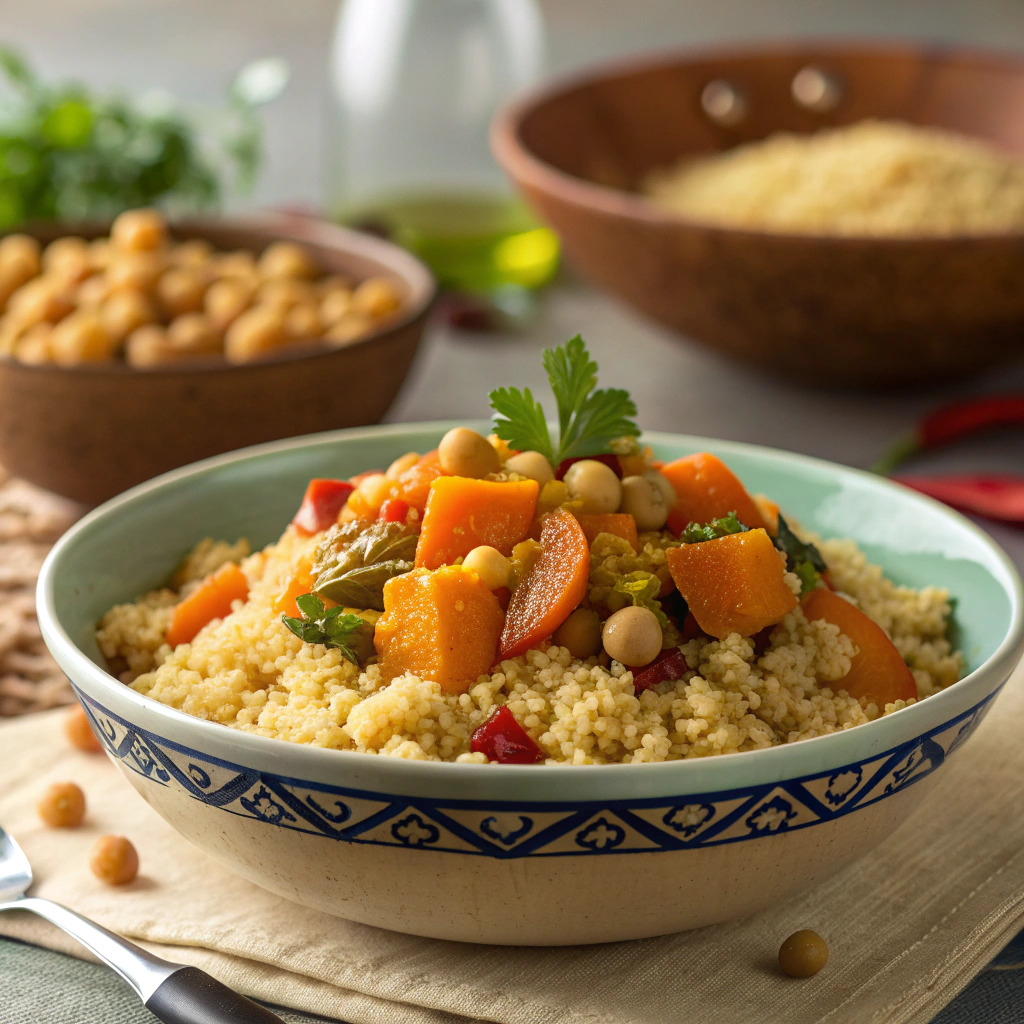
This dish is special because it combines the simplicity of couscous with a medley of spices and vegetables, creating a satisfying and nutritious meal. The beauty of Moroccan couscous lies in its versatility; it can be served as a side or as a main course, easily accommodating a variety of dietary preferences. The warming spices such as cumin, coriander, and cinnamon offer a fragrant aroma that fills the kitchen, making it an inviting dish for family and friends. Traditionally, couscous is steamed, giving it a light and fluffy texture that pairs beautifully with stews or grilled meats. Moreover, it is quick to prepare, allowing you to enjoy a homemade meal without spending hours in the kitchen. This recipe reflects not only the flavors of Morocco but also the cultural significance of sharing meals together.
To prepare Moroccan couscous, you will need a few essential tools.
For best results, use high-quality couscous, as it will greatly influence the final texture. Always rinse the couscous in cold water before cooking to remove excess starch, which helps prevent clumping. When steaming, ensure the water reaches a rolling boil before placing the couscous over it. This technique allows for even cooking. Remember to check the internal temperature of any meat served alongside the couscous; chicken should reach 165°F, while ground beef should be cooked to 160°F for food safety. If using vegetables, ensure they are fresh and properly washed. Always keep your workspace clean and avoid cross-contamination by using separate cutting boards for vegetables and meats.

Store leftovers in an airtight container in the refrigerator for up to three days. Reheat gently in a saucepan or microwave.
There are numerous ways to customize this dish to suit your taste. Consider adding dried fruits such as raisins or apricots for a touch of sweetness. You can also incorporate nuts like almonds or pistachios for added crunch. For a heartier version, add chickpeas or lentils, which will enhance the protein content. If you enjoy spice, include harissa or cayenne pepper to give the dish a kick. Additionally, you can experiment with different vegetables based on seasonal availability, such as bell peppers, zucchini, or eggplant.
For serving, fluff the couscous with a fork to separate the grains, then transfer it to a large serving platter. Top with your choice of grilled meats or a vegetable stew for a complete meal. Garnish with fresh herbs like cilantro or parsley for a pop of color and flavor. Moroccan couscous is best enjoyed warm, and leftovers can be refrigerated and reheated for a quick meal later in the week.
| Problem | Solution |
|---|---|
| The couscous is clumpy and not fluffy. | Ensure you rinse the couscous thoroughly and allow it to steam properly. If it clumps, try fluffing it with a fork and adding a bit of olive oil to separate the grains. |
| The dish lacks flavor. | Make sure to season the broth adequately and consider adding more spices or fresh herbs during cooking to enhance the overall taste. |
| Vegetables are undercooked. | Cut vegetables into smaller pieces for quicker cooking and make sure to check for doneness before serving. |
| Couscous is too dry. | If the couscous seems dry, you can add a little more broth or water and let it steam for a few more minutes to achieve the desired consistency. |
Can I use instant couscous?
Yes, you can use instant couscous, but the cooking time may vary.
Is this recipe gluten-free?
No, traditional couscous is made from wheat; however, you can substitute with gluten-free grains.
Can I make this dish vegan?
Yes, simply use vegetable broth and omit any meat.
How can I make it spicier?
Add more spices like cayenne pepper or harissa to increase the heat.
