
📌 Love these? Pin your favorites—it helps us grow!
Imagine pulling a golden-brown, crusty artisan loaf from the oven, its aroma filling your kitchen. This no knead bread dutch oven recipe makes it possible with minimal effort and maximum flavor.
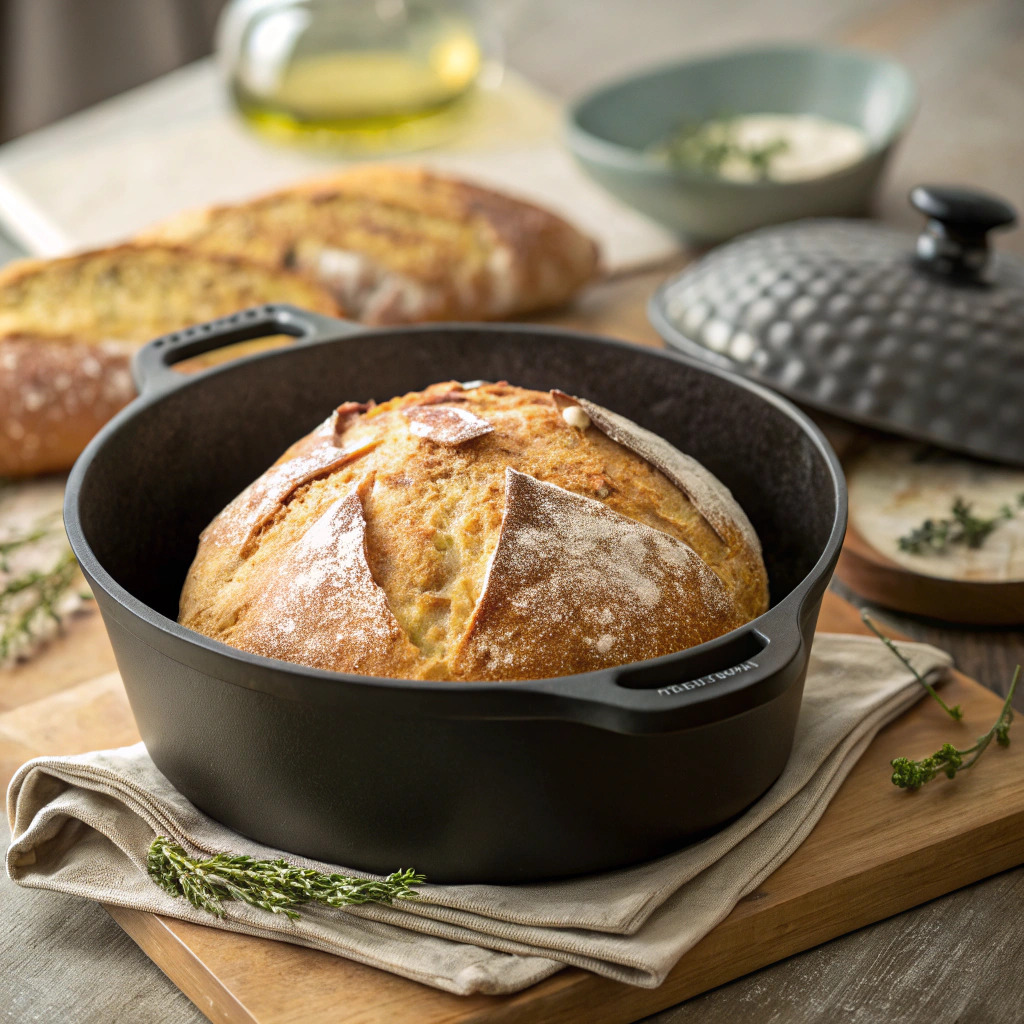
What makes this recipe special is its simplicity and the incredible results it delivers. With just a few ingredients and some patience, you can achieve a loaf with a crispy crust and soft, airy interior that rivals any bakery's offering. The use of a dutch oven creates the perfect environment for the bread to rise and develop that coveted crust while trapping steam to keep the inside moist. This method requires no kneading, making it accessible to both novice bakers and seasoned pros alike.
Additionally, the long fermentation time allows the dough to develop rich flavors, which is a hallmark of artisanal bread. The beauty of this recipe lies in its versatility; you can easily customize it by adding herbs, spices, or even cheese to create your signature loaf.
For this no knead bread dutch oven recipe, you will need the following equipment:
To ensure success with this recipe, keep a few tips in mind. First, make sure your yeast is fresh; expired yeast can prevent your bread from rising properly. Use a kitchen scale for accurate measurements, especially for flour. When mixing the dough, aim for a shaggy consistency; it should be sticky but not overly wet. Always allow the dough to rise in a warm area, as cooler temperatures can slow fermentation.
Food safety is critical; always wash your hands and utensils after handling raw ingredients. If you're using any toppings or mix-ins, ensure they are fresh and free from spoilage. Remember to check the internal temperature of the bread; it should reach at least 200°F for a fully baked loaf. Allow it to cool on a wire rack to maintain its crusty exterior.

Store leftover bread in a paper bag at room temperature for up to three days. For longer storage, wrap tightly in plastic wrap and freeze for up to three months.
There are numerous ways to customize this no knead bread dutch oven recipe. You can add herbs such as rosemary or thyme for a fragrant twist. For a savory option, consider incorporating shredded cheese or olives into the dough. If you prefer a sweeter bread, adding dried fruits like cranberries or raisins along with a sprinkle of cinnamon can create a delightful breakfast loaf. Experimenting with different types of flour, such as whole wheat or rye, can also yield interesting results, enhancing both the flavor and nutrition of your bread.
This crusty artisan loaf is perfect for serving alongside soups or salads, or simply enjoyed with a pat of butter. Slicing it fresh and serving it warm enhances the experience, allowing the aroma to entice your guests. Pair it with a selection of cheeses, charcuterie, or spreads for an impressive appetizer. For a more casual setting, enjoy it as a sandwich base, filled with your favorite ingredients. The possibilities are endless with this versatile bread.
| Problem | Solution |
|---|---|
| The bread did not rise adequately. | Ensure your yeast is active by proofing it in warm water with a pinch of sugar before mixing. Also, consider the temperature of your environment; it should be warm enough to encourage fermentation. |
| The crust is too hard or burnt. | Check your oven temperature with an oven thermometer to ensure accuracy. If the crust is browning too quickly, you can cover the dutch oven with aluminum foil partway through the baking process to prevent burning while allowing the bread to cook through. |
Can I use whole wheat flour instead of all-purpose flour?
Yes, you can substitute whole wheat flour, but you may need to adjust the water amount as whole wheat absorbs more moisture.
How can I tell when the bread is done baking?
The bread should be golden brown and have an internal temperature of at least 200°F to ensure it's fully cooked.
