
📌 Love these? Pin your favorites—it helps us grow!
Pasta Carbonara is a beloved Italian dish known for its rich, creamy sauce and comforting flavors. This classic recipe combines simple ingredients to create a dish that is both satisfying and indulgent.
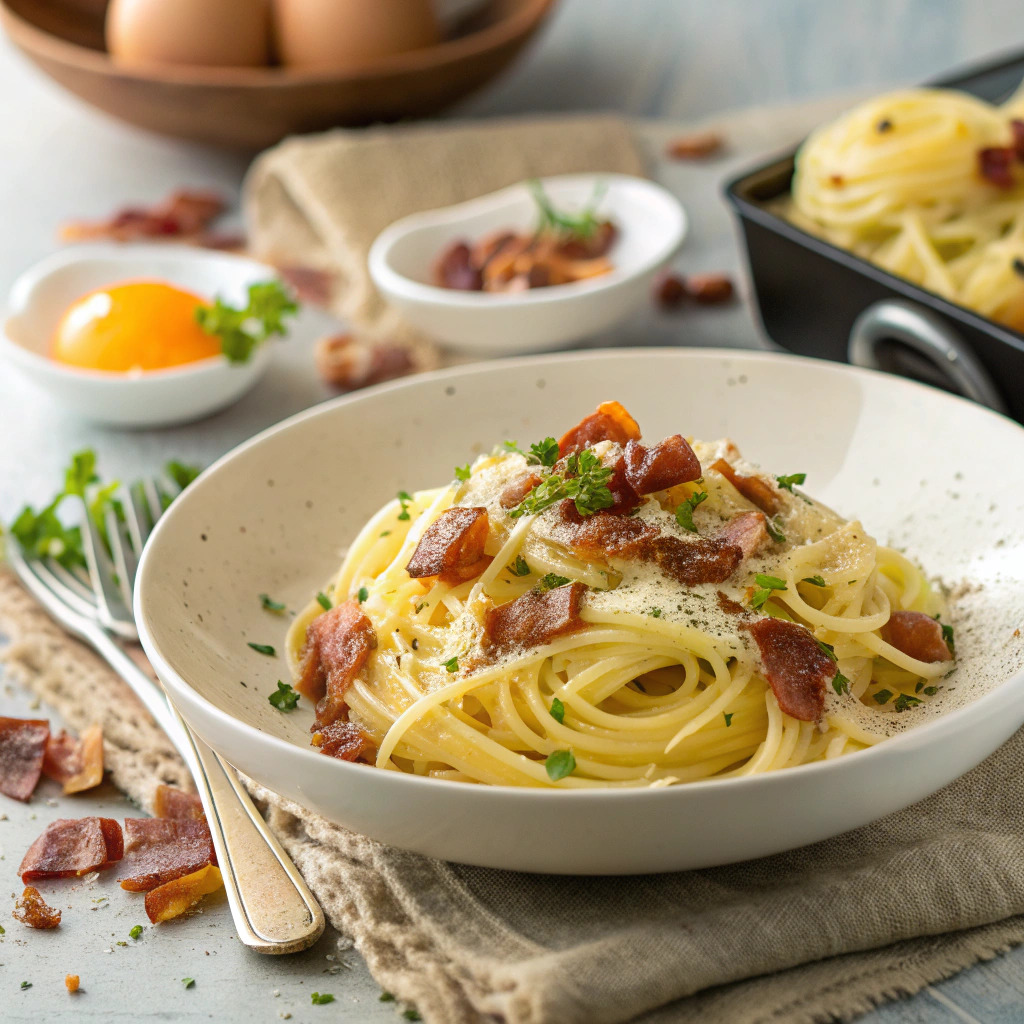
The magic of pasta carbonara lies in its simplicity and depth of flavor. This dish showcases the beauty of traditional Italian cooking, where just a few quality ingredients come together to create something extraordinary. The combination of eggs, cheese, pancetta, and black pepper forms a luscious sauce that clings to al dente pasta, making it a favorite for many. This recipe is particularly special because it is quick to prepare, making it perfect for a weeknight dinner or a gathering with friends. The creamy texture and savory kick of pancetta will transport you straight to a rustic Italian kitchen. It's essential to use fresh ingredients, especially the cheese, to enhance the dish's overall taste. Once you master this recipe, you’ll find yourself returning to it time and again, impressing family and guests alike.
To prepare pasta carbonara, you will need a few essential tools to make the process smooth and efficient.
For the best results, ensure your pasta is cooked al dente, as it will continue to cook slightly when combined with the sauce. Use freshly grated Pecorino Romano or Parmesan cheese for a richer flavor. It's crucial to add the egg mixture off the heat to prevent scrambling the eggs; instead, you want a creamy sauce. Always practice food safety by ensuring your pancetta is cooked to a safe temperature and that your hands and surfaces are sanitized. If you have leftover sauce, store it separately from the pasta to maintain the dish's integrity. Remember to check the internal temperature of any meat to ensure it reaches at least 145°F to ensure safety.

Store any leftovers in an airtight container in the refrigerator for up to three days. Reheat gently on the stove with a splash of water or broth to loosen the sauce.
While traditional pasta carbonara is made with pancetta, you can experiment with different meats such as guanciale, which is the authentic choice, or even turkey bacon for a lighter option. For a vegetarian version, consider adding sautéed mushrooms or asparagus to the dish while maintaining the creamy sauce by substituting the pancetta with smoked paprika for a smoky flavor. Incorporating peas or spinach can also add a fresh touch to the classic recipe. Feel free to adjust the cheese or add garlic for a different twist, making this dish your own while still embracing the essence of carbonara.
Serve pasta carbonara immediately while it's hot for the best flavor and texture. Garnish with additional grated cheese and a sprinkle of freshly cracked black pepper to enhance its presentation. Pair the dish with a crisp green salad and a glass of white wine to complement the richness of the carbonara. This dish is perfect for gatherings and will surely be a crowd-pleaser, as its creamy, savory goodness is universally loved.
| Problem | Solution |
|---|---|
| The sauce turns out too runny. | Ensure you are using the right balance of cheese and eggs, and mix thoroughly off the heat. If necessary, allow the pasta to sit for a minute to thicken the sauce. |
| The eggs scramble when combined with the pasta. | Always remove the pan from heat before adding the egg mixture to avoid direct heat and stirring quickly to allow the residual heat to create a creamy sauce. |
| The dish lacks flavor. | Ensure you are using quality ingredients, especially the cheese and pancetta. Adding freshly cracked black pepper and adjusting salt levels can also enhance the overall taste. |
Can I use cream in pasta carbonara?
Traditional pasta carbonara does not use cream; the sauce is made creamy from the eggs and cheese.
What type of pasta is best for carbonara?
Spaghetti is the most commonly used pasta for carbonara, but any long pasta works well.
How can I make carbonara vegetarian?
You can replace pancetta with sautéed vegetables like mushrooms or asparagus and add smoked paprika for flavor.
